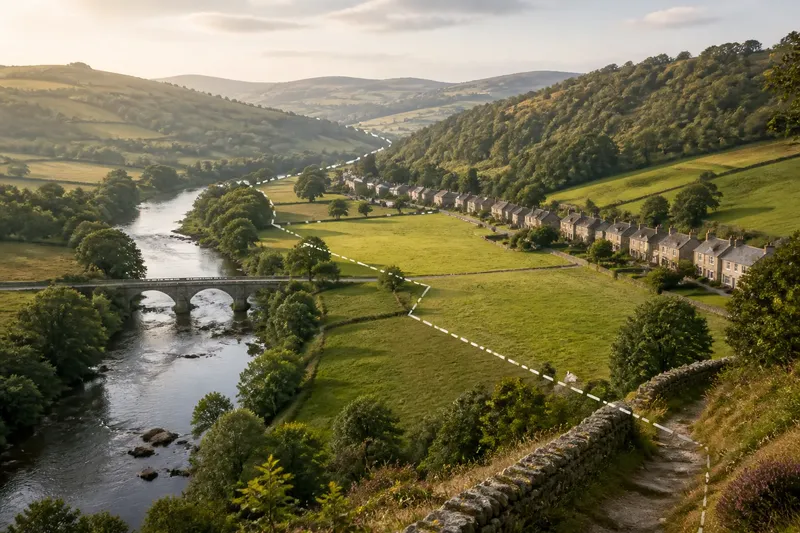
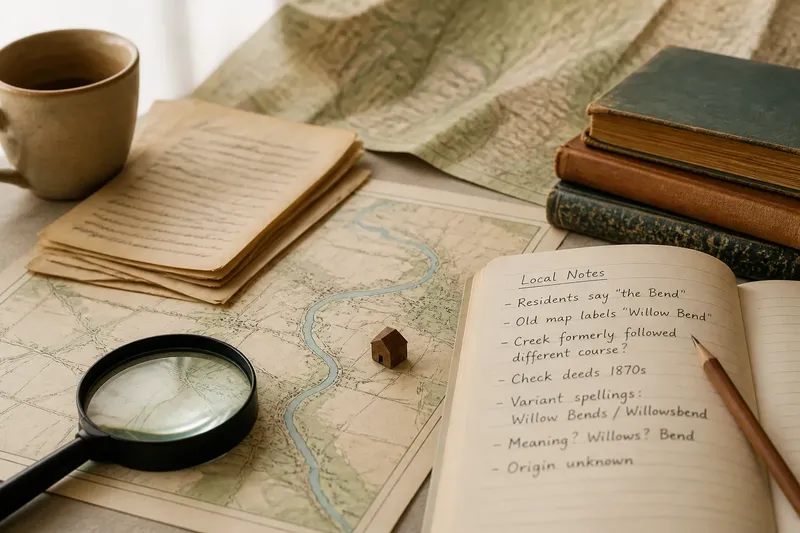
The Landmark Trap: One Building Cannot Stand for a County
A county landmark can open a view of local identity, but reading it beside homes, roads, work sites, and public buildings gives a fuller portrait.
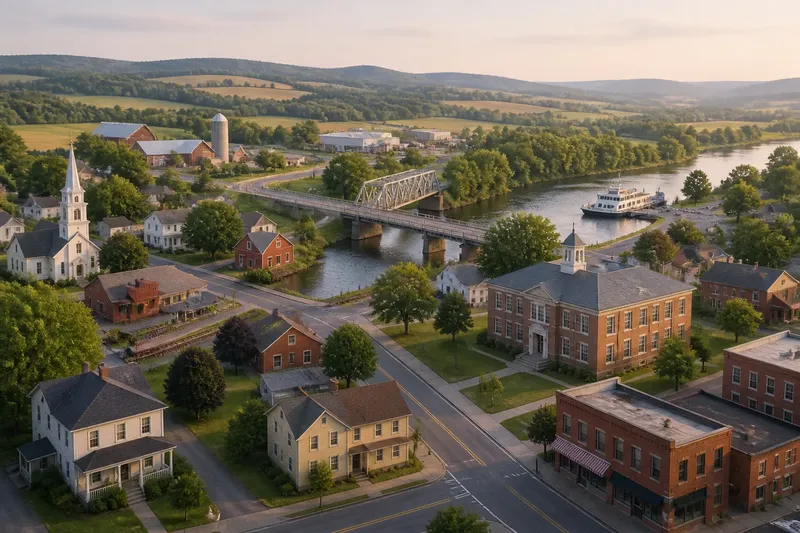
A county landmark can introduce a place, but it cannot represent the whole county. A stone courthouse, grand estate, or old mill may be the building visitors remember, while the county’s built character also lives in farm lanes, apartment blocks, ferry landings, schools, workshops, and ordinary town streets. Seeing those places together makes the landmark more meaningful, not less.
The trap is not admiring a prominent building. It is treating visibility as completeness: assuming that what is easiest to photograph or explain is what most residents share. A county’s built heritage is a collection of evidence about how people have gathered, worked, traveled, governed, and made homes across different settings.
What Landmarks Show
A landmark earns attention through some combination of scale, age, location, striking design, public use, or a story attached to it. A courthouse may signal county government; a bridge may mark a river crossing; a former factory may make an industrial past visible. These are useful clues, but each points to a particular part of local life.
Prominence can also come from the way a building is presented. It may appear on signs, tourism materials, school assignments, or a town’s promotional images. That repeated attention makes it familiar, even to people who rarely enter it. Familiarity is a measure of recognition, though, not a census of the county’s experiences.
Think of a landmark as the cover of a book. It can offer a strong first impression, but the cover does not tell you which chapters are missing or whose lives fill the pages. The useful question is what other buildings and spaces make the landmark’s story legible.
Visibility and Representation
One building can stand for a county in a narrow, practical sense: it may serve as an address, a meeting place, or a convenient symbol. Problems arise when that shorthand quietly becomes a claim about shared identity. A building associated with a county seat, for example, may be central to public life in one town while feeling distant from residents in outlying communities.
Buildings also preserve uneven traces. A large public structure may have a clear name and an official history, while a modest boardinghouse, roadside store, or workers’ hall may have changed hands and uses without leaving an equally visible account. If only celebrated sites count as heritage, the county’s image can become weighted toward institutions and wealthy owners, even where everyday places shaped more people’s routines.
This does not mean that the famous building is false or unimportant. It means its meaning has a location, a purpose, and a point of view. A courthouse tells something about public authority; it cannot, by itself, describe how a county’s residents found work, worshiped, learned, or reached one another.
Read the Built Landscape
To widen the view, look for different kinds of built places rather than a longer list of grand buildings. The aim is not to collect landmarks like trophies. It is to notice how structures fit into daily routes and relationships across the county.
- Homes: Compare the forms of housing in town centers, villages, and rural areas. Porch layouts, shared walls, outbuildings, and additions can hint at different household needs and patterns of settlement.
- Workplaces: Look for barns, mills, depots, workshops, warehouses, and commercial blocks. Their placement can show how production and trade connected to roads, rail lines, waterways, or nearby neighborhoods.
- Public institutions: Schools, libraries, fire stations, post offices, and civic halls show where people were expected to meet and receive services. A building’s location can matter as much as its style.
- Routes and crossings: Bridges, station platforms, canal structures, and road junctions help explain movement between communities. Their value may lie in the connection they enabled rather than in their appearance alone.
- Everyday gathering places: Storefronts, granges, churches, recreation halls, and local markets can reveal social life that official monuments leave out.
These categories overlap. A former school might now house municipal offices; a converted mill could contain apartments and small businesses. Rather than treating reuse as a footnote, ask what the change says about the building’s continuing place in community life.
Context Changes Meaning
A building is easier to interpret when you notice its surroundings. A courthouse beside a square, shops, and bus stops sits within a different public landscape from one reached mainly by car along a commercial road. A rural church with a cemetery and a neighboring hall may connect faith, family memory, and gathering in ways that its architecture alone cannot convey.
Connections matter as much as adjacency. A bridge can join two settlements, but the roads leading to it may show which routes remain convenient and which places are bypassed. A school’s location may tell you something about the area it served; its later conversion might show how that service moved or changed. The building is evidence, while its relationships supply much of the explanation.
Imagine a county brochure that features an ornate courthouse as its sole image. A resident adding a photograph of a former rail depot, a neighborhood grocery, and a school repurposed as a community center would change the picture’s emphasis. The expected result is not a rival icon, but a more layered account: governance, transport, commerce, and shared services all become visible.
Questions About County Landmarks?
Can one building ever represent a county?
It can serve as a useful symbol, especially when residents recognize it as a shared meeting place or civic landmark. It becomes misleading only when the symbol is treated as a complete account of communities and experiences beyond its immediate setting.
How can I find less-famous historic buildings?
Walk or drive through different kinds of settlements and notice buildings still used for housing, work, worship, education, or gathering. Local historical societies, public libraries, preservation offices, and older maps can help identify places whose stories are not prominent in visitor materials.
Does an altered building still count as heritage?
Yes. A changed facade or new use does not erase a building’s earlier role, though the evidence may be harder to read. Compare visible features, local records, and current use without assuming that every change represents decline or loss.
What if residents disagree about a landmark?
Disagreement can reveal that the building carries different meanings for different groups. Describe those viewpoints clearly and look for other places that show experiences the landmark does not hold.
A Fuller County Portrait
When considering a county landmark, ask who used the building, who could reach it, and what kinds of daily activity happened nearby. Then look for structures that add different evidence: a small-town school, a farm complex, a public landing, a row of storefronts, or a converted workplace. These places need not be famous to be informative.
For a fuller portrait of county built heritage, keep the landmark in view while widening the frame. Include ordinary buildings, changed uses, and connections between settlements; distinguish what the prominent structure can show from what it cannot. That approach lets one memorable building remain a point of entry without asking it to carry the county’s entire identity.