What a Place Name Can Preserve, and What It Cannot
Learn what a place name can preserve about language and local use, and how to check its limits before treating it as a complete history.
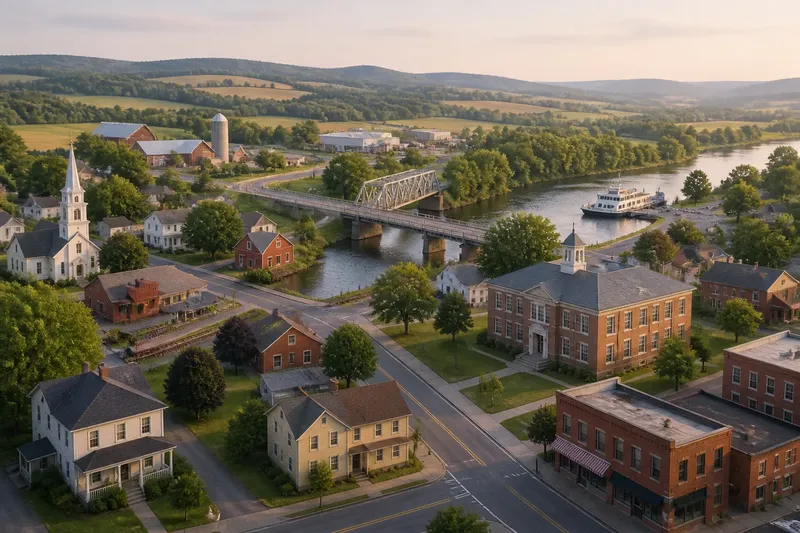
A county place name can preserve a sound, a landscape feature, or a pattern of local use, but the name alone rarely identifies who coined it or when. Treating it as a clue rather than a complete account helps separate what records establish from what remains interpretation.
Sounds and Meanings
Names often pass through speech even after their original meaning becomes unfamiliar. A word may be shortened, reshaped to fit another language, or written according to a clerk’s spelling habits. Its present form can retain an audible trace without offering a clear definition.
A familiar-looking word is not automatically the source of a place name. Similar sounds may arise independently, and spelling can conceal older pronunciations. Local pronunciation can help: residents may consistently stress a syllable or preserve a vowel absent from maps and official documents.
Record how people say a name, but do not turn resemblance into a confident etymology. A place name is like a label on an old jar: it can survive after the contents and the reason for the label have become uncertain.
Layers of Use
A name may reflect several periods of use rather than a neat sequence. A landscape term might be adopted by newcomers, adapted in speech, and later standardized in writing. The resulting form can carry traces of these layers without revealing exactly how they fit together.
A name’s current spelling may be relatively recent even if a related spoken form is older. Conversely, a name that sounds ancient may have been coined later from an older-looking word or feature.
Keep a documented form separate from a proposed origin. A map or deed can show that a spelling was in use when the document was made; it cannot, by itself, show when the name first arose or which community supplied it.
Landscape Clues
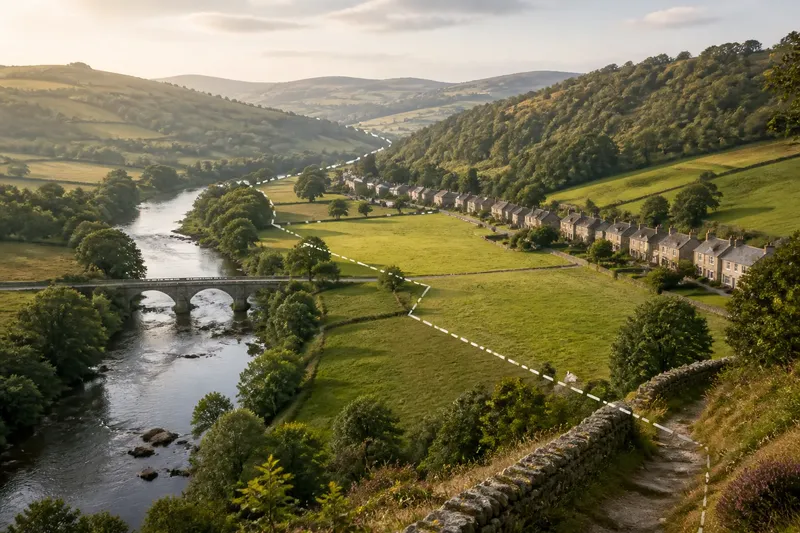
Some names seem to describe a ridge, creek, clearing, marsh, or crossing. They may point to a feature people noticed or used, but they are not surveys of the whole landscape. The named area may have shifted, or the term may refer to a small local feature rather than the county around it.
Names can also outlast the features they once described. A stream may have been diverted, a clearing may have grown over, or a crossing may no longer be visible. The name suggests that a description or association mattered at some point; it does not prove that the feature remains unchanged.
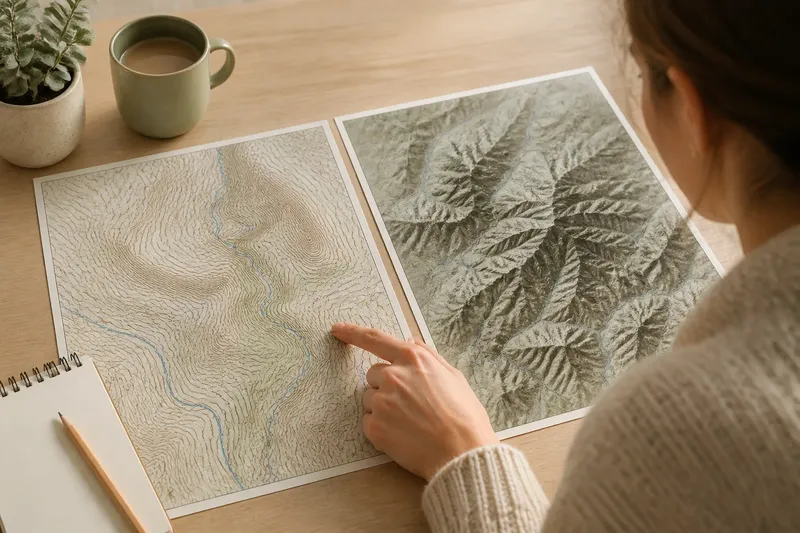
Compare the name with maps, terrain, and local records before assigning it to a specific landform. If those sources do not align, keep the possibilities open rather than forcing the name to fit the present view.
What Can Records Tell Us?
What does an old map establish?
An old map establishes that its maker used a particular label by the time the map was produced. Its placement may help identify whether the label refers to a settlement, stream, district, or county. It does not establish that the mapped form was the first name or that every resident used it.
Can spelling reveal the original language?
Spelling can offer clues about how a name was heard or recorded, but it also reflects the writer’s conventions and choices. A form that resembles a word in one language is not conclusive evidence of origin. Compare independent records and note pronunciation where it is available.
Does a name identify who lived there?
A name may be associated with a family, community, or language, but that association needs supporting evidence. The name alone cannot establish a population’s identity, size, or continuity. Look for records that directly document people and their use of the place.
How should conflicting local accounts be handled?
Disagreement may show that different groups remember or use a name in different ways. Record who uses each form and in what setting rather than flattening those accounts into one official story. A county gazetteer, local newspaper, oral-history collection, and map can each preserve a different kind of evidence.
Evidence in Context
Keep evidence types distinct when investigating a county place name. A map records a cartographer’s label, a deed records language used in a transaction, and a local directory may show a form used in everyday administration. Comparing them can narrow what is plausible, though no single source answers every question.
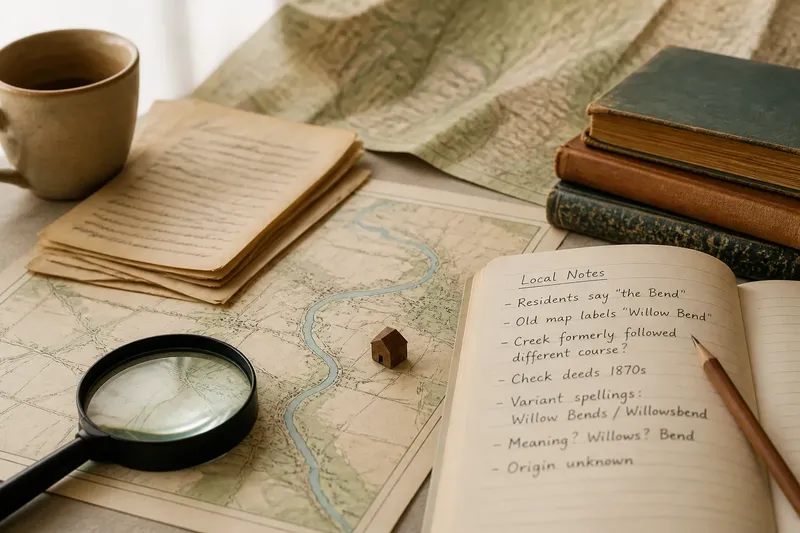
Say a researcher sees “Willow Bend” on a county map and hears residents call a nearby settlement “the Bend.” The researcher notes both forms, checks older maps and property records for earlier spellings, and compares the location with the creek’s course. If the older records do not contain “Willow Bend,” the result is that this label is documented in the maps examined, while its origin remains unresolved; the creek or willows alone do not explain who named it.
For each candidate name, check these points and let the evidence guide the next decision:
- Check the earliest dated form you can locate; if it appears in a contemporary record, cite that date and source, but if no dated form turns up, describe the earliest evidence as unknown.
- Check whether the source identifies a settlement, stream, district, or county; if it does, keep that referent, but if it does not, avoid assigning the label to a specific feature.
- Check for alternative spellings and spoken forms; if they recur across sources, record them together, but if they appear only once, mark them as isolated rather than established variants.
- Check who produced each record and why; if the source’s purpose is clear, explain what kind of use it documents, but if it is unclear, limit the claim to the wording visible on the page.
- Check whether the proposed explanation is directly documented; if it is, distinguish the record from your interpretation, but if it is not, describe the origin as a possibility rather than a fact.
- Check whether maps, terrain, and local accounts point to the same feature; if they align, say the interpretation is consistent with those sources, but if they conflict, preserve the alternatives and identify the disagreement.
These checks do not make a place name less valuable. They clarify what it can tell you and where further evidence is needed.
Names and Their Limits
A county place name can preserve a local sound, a remembered feature, or an administrative choice while leaving much of its history unstated. Use it as an entry point, then pair it with records that speak more directly to language, land, and community. A careful account says plainly what the name supports and where the evidence stops.